[wprebay kw=”iphone+applications” num=”6″ ebcat=”all”]
[wprebay kw=”iphone+applications” num=”7″ ebcat=”all”]
[wprebay kw=”iphone+applications” num=”8″ ebcat=”all”]
Aug
25
[wprebay kw=”iphone+applications” num=”6″ ebcat=”all”]
[wprebay kw=”iphone+applications” num=”7″ ebcat=”all”]
[wprebay kw=”iphone+applications” num=”8″ ebcat=”all”]
The Rising Future of iPhone SDK Development
Communication technology as well as the accessories used in telecommunication has fast advanced now than we can imagine. The development of cell phone technology has been very fast emerging and one of the dominating companies to design and market high tech mobile phones is the Apple, Inc. They have come up with the iPhone which have several functions such as a camera, visual voicemail, text messaging, portable media player, as well as an internet functions like email, browsing the web features among others. The unit prior iPhone is the iPhone 3G which supports assisted GPS and it also has faster data speeds. Before the release of the iPhone 3G, Apple made an announcement that there will be an allowance of third party applications on the unit. Likewise, before the release of the new version, Apple again made an announcement that there will also be allowance of third party applications on the new version. As of July 11, 2008, a total of 21.4 million units of the 3G iPhone and the newer version were already sold. iPhone Inc. has seen the potential of earning lots of money by providing amazing useful applications as well as great entertainment. Realizing the potential, iPhone has provided developers a software development kit or SDK so that they may be able to design and develop various programs as well as test these programs in an iPhone simulator. IPhone app companies have seen this potential so they develop applications for iPhone development and make these applications available in the App Store. Even the freelancer iPhone App developers likewise have seen this great opportunity to make big money so they are also enticed to create useful and entertaining programs which they submit to the App Store. However, so they may have this opportunity, they are required to apply for the Apple developer connection membership fee for a fee. This shall make downloading of the iPhone SDK app legal. Profit sharing of 70% for the iPhone application developers and 30% for Apple, Inc is implemented. The possibilities are almost endless as newer and better applications are in demand to be created. Mobile app developers were given the opportunity to set their price and this has made the idea more lucrative because they can set their price. Moreover, the iPhone developers were also given permission to provide free programs. As a matter of fact, millions of applications are being sold every month. And with every new and better operating system that comes out, SDK developers will be able earn more when they develop more useful as well as more innovative mobile applications.
Communication technology as well as the accessories used in telecommunication has fast advanced now than we can imagine. The development of cell phone technology has been very fast emerging and one of the dominating companies to design and market high tech mobile phones is the Apple, Inc. They have come up with the iPhone which have several functions such as a camera, visual voicemail, text messaging, portable media player, as well as an internet functions like email, browsing the web features among others.
The unit prior iPhone is the iPhone 3G which supports assisted GPS and it also has faster data speeds. Before the release of the iPhone 3G, Apple made an announcement that there will be an allowance of third party applications on the unit. Likewise, before the release of the new version, Apple again made an announcement that there will also be allowance of third party applications on the new version. As of July 11, 2008, a total of 21.4 million units of the 3G iPhone and the newer version were already sold.
iPhone Inc. has seen the potential of earning lots of money by providing amazing useful applications as well as great entertainment. Realizing the potential, iPhone has provided developers a software development kit or SDK so that they may be able to design and develop various programs as well as test these programs in an iPhone simulator. IPhone app companies have seen this potential so they develop applications for iPhone development and make these applications available in the App Store. Even the freelancer iPhone App developers likewise have seen this great opportunity to make big money so they are also enticed to create useful and entertaining programs which they submit to the App Store.
However, so they may have this opportunity, they are required to apply for the Apple developer connection membership fee for a fee. This shall make downloading of the iPhone SDK app legal. Profit sharing of 70% for the iPhone application developers and 30% for Apple, Inc is implemented. The possibilities are almost endless as newer and better applications are in demand to be created. Mobile app developers were given the opportunity to set their price and this has made the idea more lucrative because they can set their price. Moreover, the iPhone developers were also given permission to provide free programs.
As a matter of fact, millions of applications are being sold every month. And with every new and better operating system that comes out, SDK developers will be able earn more when they develop more useful as well as more innovative mobile applications.
This earning potential of the SDK app development has made the App Store more popular. The popularity, fame and review of this product have made millions of people to buy without considering its cost either.
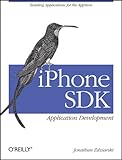
This practical book offers the knowledge and code you need to create cutting-edge mobile applications and games for the iPhone and iPod Touch, using Apple’s iPhone SDK. iPhone SDK Application Development introduces you to this development paradigm and the Objective-C language it uses with numerous examples, and also walks you through the many SDK frameworks necessary for designing full-featured applications.
This book will help you: Design user interface elements with Interface Builder
Rating:  (out of 20 reviews)

List Price: $ 34.99
Price: $ 14.98
Custom Camera Applications Development Using Iphone Sdk
iPhone contains many useful features. One of them is build-in camera and Camera application system for making photos. It looks great but what about camera usage with native applications? iPhone SDK provides the capability of using camera through UIImagePickerController class. That’s great but there is a small disadvantage – you cannot create a full-screen persistent “live” camera view like the Camera application does. Instead of that you should use UIImagePickerController only in modal mode – show the pop-up modal view when you need a photo and close the view after the photo is made. You have to reopen this view again to take the next one.
Moreover, that modal view contains additional panels and controls that overlay the camera view. Another disadvantage is – you cannot take a photo in one touch; you need to touch the Shoot button to take a picture and preview it, and then you need to touch the Save button to get the photo for processing. Probably it’s the best practice but I don’t like it and I hope you think the same way.
What about using the UIImagePickerController as an ordinal non-modal view controller under the navigation controller the same way as we use the other view controllers? Try it and you will found that it works! The camera view works and looks as it should. You can assign a delegate and process UIImagePickerControllerDelegate events to get and save the photo. Ok, touch the Shoot button, touch the Save button – great, you’ve got the photo! But just look at this – the Retake and Save buttons stay above the camera view, and they don’t work now when they are touched… This is because you cannot reset the view to take another photo after taking one and touching the Save button, the view is freezed and the buttons are disabled. It seems you need to fully recreate the UIImagePickerController instance to take another photo. That’s not so simple and not so good. And you still need to use the panels and buttons that overlay the camera view…
Now I have an idea! When we touch Shoot, the view stops refreshing and displays single image from the camera; then we have to touch Retake or Save button. Can we get that image and save it without using the UIImagePickerControllerDelegate and then touch the Retake button programmatically to reset the view and get another photo? Sure we can! If you explore the camera views hierarchy after touching Shoot you will find that there is a hidden view of ImageView type. This class is not described in the SDK, but we can explore its’ methods using Objective-C capabilities. We can see that the class contains a method called imageRef. Let’s try this… Yes, it returns CGImage object! And the image size is 1200 x 1600 – it’s definitely the camera picture!
Ok, now we know we can get the photo without UIImagePickerControllerDelegate. But in what moment should we do this? Can we catch the user touches on the Shoot button to start processing? It’s possible but not so good. Do you remember our main purpose – creating the persistent full-screen camera view like system Camera application does? It’s time to do it! When we explored the views hierarchy, we’ve found that there are number of views above the camera view. We can try to hide these views and create our own button below the camera view to take the photo in one touch. But how can we force the camera view to make the photo? It’s very simple – we can get the corresponding selector from the Shoot button and call it from our action handler!
Ok, we’ve forced getting the image. But it takes us few seconds. How can we detect that the image is ready? It occurred when the Cancel and Shoot buttons are replaced by Retake and Save ones. The simplest way to detect this is starting a timer with short interval and checking the buttons. And then we can get and save the photo, using the corresponding selector from the Retake button and calling it to reset the camera view and prepare it for making a new one. Here is the code:
// Shot button on the toolbar touched. Make the photo.
– (void)shotAction:(id)sender {
[self enableInterface:NO];
// Simulate touch on the Image Picker’s Shot button
UIControl *camBtn = [self getCamShutButton];
[camBtn sendActionsForControlEvents:UIControlEventTouchUpInside];
// Set up timer to check the camera controls to detect when the image
// from the camera will be prepared.
// Image Picker’s Shot button is passed as userInfo to compare with current button.
[NSTimer scheduledTimerWithTimeInterval:0.2 target:self selector:@selector(savePhotoTimerFireMethod:) userInfo:camBtn repeats:NO];
}
// Return Image Picker’s Shoot button (the button that makes the photo).
– (UIControl*) getCamShutButton {
UIView *topView = [self findCamControlsLayerView:self.view];
UIView *buttonsBar = [topView.subviews objectAtIndex:2];
UIControl *btn = [buttonsBar.subviews objectAtIndex:1];
return btn;
}
// Return Image Picker’s Retake button that appears after the user pressed Shoot.
– (UIControl*) getCamRetakeButton {
UIView *topView = [self findCamControlsLayerView:self.view];
UIView *buttonsBar = [topView.subviews objectAtIndex:2];
UIControl *btn = [buttonsBar.subviews objectAtIndex:0];
return btn;
}
// Find the view that contains the camera controls (buttons)
– (UIView*)findCamControlsLayerView:(UIView*)view {
Class cl = [view class];
NSString *desc = [cl description];
if ([desc compare:@”PLCropOverlay”] == NSOrderedSame)
return view;
for (NSUInteger i = 0; i < [view.subviews count]; i++)
{
UIView *subView = [view.subviews objectAtIndex:i];
subView = [self findCamControlsLayerView:subView];
if (subView)
return subView;
}
return nil;
}
// Called by the timer. Check the camera controls to detect that the image is ready.
– (void)savePhotoTimerFireMethod:(NSTimer*)theTimer {
// Compare current Image Picker’s Shot button with passed.
UIControl *camBtn = [self getCamShutButton];
if (camBtn != [theTimer userInfo])
{
// The button replaced by Save button – the image is ready.
[self saveImageFromImageView];
// Simulate touch on Retake button to continue working; the camera is ready to take new photo.
camBtn = [self getCamRetakeButton];
[camBtn sendActionsForControlEvents:UIControlEventTouchUpInside];
[self enableInterface:YES];
}
else
{
NSTimeInterval interval = [theTimer timeInterval];
[NSTimer scheduledTimerWithTimeInterval:interval target:self selector:@selector(savePhotoTimerFireMethod:) userInfo:camBtn repeats:NO];
}
}
// Save taken image from hidden image view.
– (BOOL)saveImageFromImageView {
UIView *cameraView = [self.view.subviews objectAtIndex:0];
if ([self enumSubviewsToFindImageViewAndSavePhoto:cameraView])
return YES;
return NO;
}
// Recursive enumerate subviews to find hidden image view and save photo
– (BOOL)enumSubviewsToFindImageViewAndSavePhoto:(UIView*)view {
Class cl = [view class];
NSString *desc = [cl description];
if ([desc compare:@”ImageView”] == NSOrderedSame)
return [self grabPictureFromImageView:view];
for (int i = 0; i < [view.subviews count]; i++)
{
if ([self enumSubviewsToFindImageViewAndSavePhoto:[view.subviews objectAtIndex:i]])
return YES;
}
return NO;
}
// Grab the image from hidden image view and save the photo
– (BOOL)grabPictureFromImageView:(UIView*)view {
CGImageRef img = (CGImageRef)[view imageRef];
if (img)
{
// Taken image is in UIImageOrientationRight orientation
UIImage *photo = [self correctImageOrientation:img];
UIImageWriteToSavedPhotosAlbum(photo, nil, nil, nil);
return YES;
}
return NO;
}
// Correct image orientation from UIImageOrientationRight (rotate on 90 degrees)
– (UIImage*)correctImageOrientation:(CGImageRef)image {
CGFloat width = CGImageGetWidth(image);
CGFloat height = CGImageGetHeight(image);
CGRect bounds = CGRectMake(0.0f, 0.0f, width, height);
CGFloat boundHeight = bounds.size.height;
bounds.size.height = bounds.size.width;
bounds.size.width = boundHeight;
CGAffineTransform transform = CGAffineTransformMakeTranslation(height, 0.0f);
transform = CGAffineTransformRotate(transform, M_PI / 2.0f);
UIGraphicsBeginImageContext(bounds.size);
CGContextRef context = UIGraphicsGetCurrentContext();
CGContextScaleCTM(context, – 1.0f, 1.0f);
CGContextTranslateCTM(context, -height, 0.0f);
CGContextConcatCTM(context, transform);
CGContextDrawImage(context, CGRectMake(0.0f, 0.0f, width, height), image);
UIImage *imageCopy = UIGraphicsGetImageFromCurrentImageContext();
UIGraphicsEndImageContext();
return imageCopy;
}
Another important question is: in what moment can we hide the overlaying camera views and controls and create our own button? Trying the viewDidLoad… Oops… The camera view is still not created. Trying the viewWillAppear… The same thing… Trying the viewDidAppear… Yes, the views have been created and can be hidden now. Ok, we hide that and create a toolbar with our Shoot button. It works, but the screen flicks – we see how the standard views and buttons are shown and then hidden. How can we prevent this? I tried a number of ways and had found the best one: we should hide the views before they are added to the camera view (when the addSubview method of the camera view is called). It’s possible using Objective-C capability to replace the method dynamically at run-time. Ok, let’s replace the addSubview by our own method. In our method we can check that the passed view is one of the camera view subviews and set its’ “hidden” property to YES. So, we replace the addSubview in the viewWillAppear before the camera view is created. And we create our toolbar and Shoot button in the viewDidAppear after the camera view is created. Take a look at the code below:
// Replace “addSubview:” if called first time; hide camera controls otherwise.
– (void)viewWillAppear:(BOOL)animated {
[super viewWillAppear:animated];
if (toolBar != nil)
{
// The view was already appeared; we don’t need to subclass UIView
// but need to hide extra camera controls.
UIView *cameraView = [self findCamControlsLayerView:self.view];
if (cameraView)
{
cameraView = cameraView.superview;
int cnt = [cameraView.subviews count];
if (cnt >= 4)
{
for (int i = 2; i < cnt – 1; i++)
{
UIView *v = [cameraView.subviews objectAtIndex:i];
v.hidden = YES;
}
}
}
}
else
{
// Subclass UIView and replace addSubview to hide the camera view controls on fly.
[RootViewController exchangeAddSubViewFor:self.view];
}
}
// Exchange addSubview: of UIView class; set our own myAddSubview instead
+ (void)exchangeAddSubViewFor:(UIView*)view {
SEL addSubviewSel = @selector(addSubview:);
Method originalAddSubviewMethod = class_getInstanceMethod([view class], addSubviewSel);
SEL myAddSubviewSel = @selector(myAddSubview:);
Method replacedAddSubviewMethod = class_getInstanceMethod([self class], myAddSubviewSel);
method_exchangeImplementations(originalAddSubviewMethod, replacedAddSubviewMethod);
}
// Add the subview to view; “self” points to the parent view.
// Set “hidden” to YES if the subview is the camera controls view.
– (void) myAddSubview:(UIView*)view {
UIView *parent = (UIView*)self;
BOOL done = NO;
Class cl = [view class];
NSString *desc = [cl description];
if ([desc compare:@”PLCropOverlay”] == NSOrderedSame)
{
for (NSUInteger i = 0; i < [view.subviews count]; i++)
{
UIView *v = [view.subviews objectAtIndex:i];
v.hidden = YES;
}
done = YES;
}
[RootViewController exchangeAddSubViewFor:parent];
[parent addSubview:view];
if (!done)
[RootViewController exchangeAddSubViewFor:parent];
}
The technique described above was used in iUniqable application available from Apple App Store (Social Networking section). Feel free to use.
Feel free to visit the website of the developer www.enterra-inc.com
Vladimir Tarassyuk
Question by Joseph Davis: Does anyone know good video Tutorials for learning iPhone Application Development?
I have the basics down for Xcode and that whole bit but i would like to expand my horizon and become a master at writing code before the end of the year Please help and thanks.
Best answer:
Answer by Pankaj Debbarma
Visit these sites listed below and Go for the best you feel,
http://www.bestuniversities.com/blog/2009/100-free-courses-tutorials-for-aspiring-iphone-app-developers/
http://www.webresourcesdepot.com/iphone-application-and-website-development-all-tools-and-tutorials-you-need/
http://www.iphonedevcentral.org/
http://icodeblog.com/2008/08/19/iphone-programming-tutorial-creating-a-todo-list-using-sqlite-part-1/
http://iphonedevelopmentbits.com/tag/iphone-video-tutorial/
Regards.
Know better? Leave your own answer in the comments!
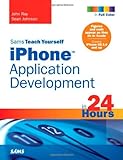
&>A clear, easy-to-understand tutorial for developers who want to write software for today’s hottest market: iPhone, iTouch, and App Store! The start-to-finish, hands-on introduction to iPhone programming for every developer, regardless of experience Introduces the iPhone development environment and teaches every essential Objective-C concept with fully-documented, carefully-explained code A complete tutorial package: step-by-step instructions, examples, Q and As, quizzes, exercises, tips, s
Rating:  (out of 17 reviews)
List Price: $ 34.99
Price: $ 18.50
[wprebay kw=”iphone+sdk” num=”6″ ebcat=”all”]
[wprebay kw=”iphone+sdk” num=”7″ ebcat=”all”]
[wprebay kw=”iphone+sdk” num=”8″ ebcat=”all”]
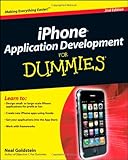
Making Everything Easier! With iPhone? Application Development for Dummies, Second Edition, you’ll learn to: Design small- or large-scale iPhone applications for profit or fun Create new iPhone apps using Xcode? Get your applications into the App Store Work with frameworks Got a good idea? Turn it into an app, have some fun, and pick up some cash! Make the most of the new 3.1 OS and Apple’s Xcode 3.2! Neal Goldstein shows you how, and e
Rating:  (out of 38 reviews)
List Price: $ 29.99
Price: $ 14.38

This is a starting point for developing on the iphone, in this tutorial we will obtain the iPhone and iPad SDK, and run our first app in the simulator. The post for this video with links can be found at maniacdev.com The eventual goal is getting an app in the app store. Please note these tutorials are not for developing apps for jailbroken apps, this is for genuine sdk development using Xcode for the app store.
Video Rating: 4 / 5

